Why Your Pharmacy Says Insurance Pays Nothing for Prescriptions
Pharmacy Benefit Managers control prescription reimbursement rates between insurers and pharmacies. Learn how they determine what you pay.

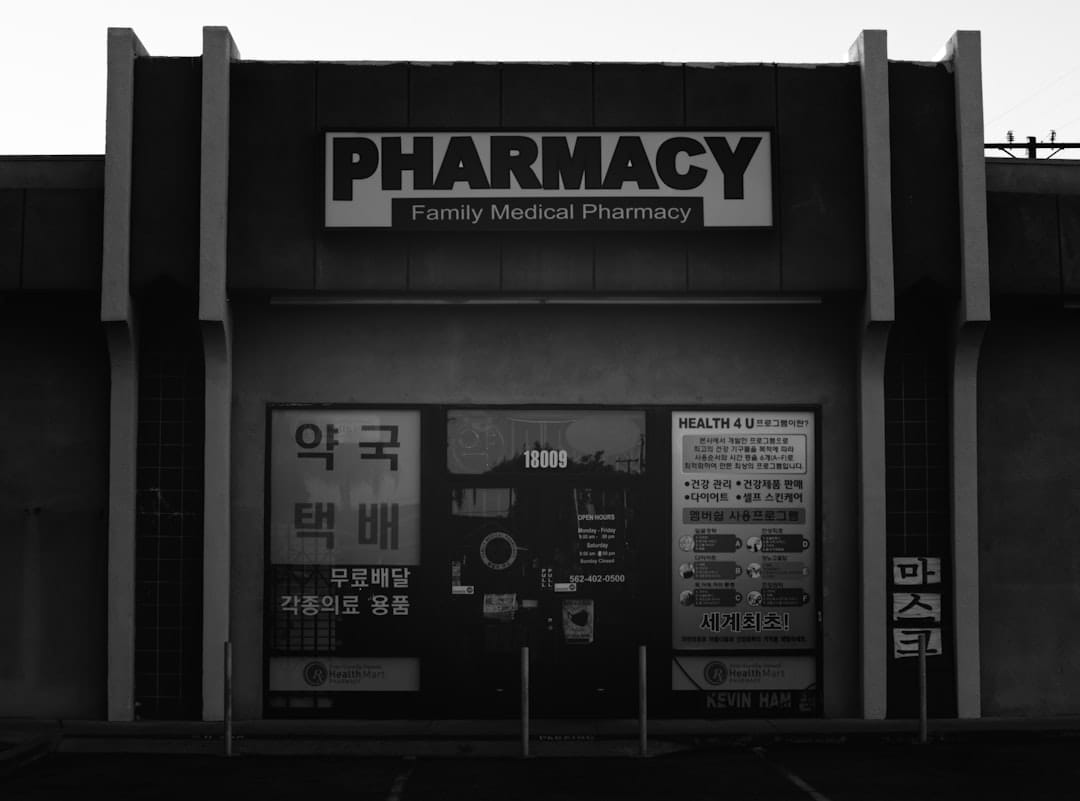
Your pharmacist just told you that your insurance is paying almost nothing on your prescription — or that your $15 copay is actually more than the drug costs without insurance. That sounds absurd, but it's real, it's common, and it has a specific cause: a layer of little-known companies called Pharmacy Benefit Managers that sit between your insurer and your pharmacy and control what your pharmacy gets paid. This article explains how that system works, why it sometimes leaves pharmacies filling prescriptions at a loss, and what you can do right now to pay less.
What Is a Pharmacy Benefit Manager (PBM)?
A Pharmacy Benefit Manager — PBM for short — is a company that manages prescription drug benefits on behalf of health insurers, employers, and government programs. The three largest are CVS Caremark, Express Scripts, and OptumRx. Together they process the majority of prescription claims in the United States. You've almost certainly never received a bill from one, but they quietly determine which drugs your plan covers, how much your pharmacy gets reimbursed, and what you pay at the counter.
PBMs were originally created to help insurers handle the administrative complexity of drug benefits and to use their negotiating power to get lower prices from drug manufacturers and pharmacies. And they do negotiate some savings — bulk purchasing across millions of patients gives them real leverage. The Centers for Medicare & Medicaid Services (CMS) describes PBMs as intermediaries who negotiate with drug manufacturers and pharmacies to manage drug costs. The problem isn't that PBMs exist — it's what some of their specific contracting practices do to pharmacies and patients.
Why Your Pharmacy Sometimes Makes Nothing — or Loses Money
When your pharmacy fills a prescription, it submits a claim to your insurer's PBM. The PBM pays the pharmacy a set reimbursement amount — and that amount is sometimes less than what the pharmacy paid to buy the drug in the first place. Your copay may be the entire payment the pharmacy receives for that transaction, and if your copay is $10 but the drug cost the pharmacy $12 to stock, the pharmacy just lost $2 filling your prescription.
This isn't speculation or pharmacy industry complaining. The Federal Trade Commission documented in its 2024 report on PBM practices that reimbursement rates can fall below pharmacies' acquisition costs, and that this dynamic has intensified as PBMs have gained market concentration. The FTC's report on PBM practices details how the vertical integration of PBMs with insurers and their own mail-order pharmacies creates structural conflicts of interest that disadvantage independent pharmacies in particular.
A concrete example
Let's say you take a common generic blood pressure medication — lisinopril 10mg, a 30-day supply. Your insurance plan has a $10 generic copay. That sounds reasonable. But your pharmacy may have paid $8 or $9 for that bottle of pills. After the PBM pays the pharmacy your $10 copay as the full reimbursement, the pharmacy has made $1 or $2 on the transaction before labor, overhead, and the pharmacist's time are factored in. Meanwhile, on GoodRx or a cash-pay discount program, that same prescription might be available for $4. Your "insurance" copay just cost you more than the uninsured price — and the pharmacy barely broke even serving you.
Why Independent Pharmacies Are Most at Risk
A large chain pharmacy can absorb losses on individual drugs because it fills enormous volume and can cross-subsidize from other business lines — retail merchandise, clinic services, and its own PBM (in the case of CVS). An independent pharmacy has none of those cushions. Every prescription that reimburses below cost is a direct hit to a small business operating on thin margins.
The result is a documented wave of independent pharmacy closures, particularly in rural areas and low-income urban neighborhoods where chain pharmacies have less commercial incentive to operate. When the independent pharmacy in a small town closes, patients may have no local pharmacy at all. The PBM reimbursement squeeze is widely cited by pharmacists and researchers as a leading driver of this trend.
Why Your Pharmacist May Not Have Told You About a Cheaper Option
Until recently, many PBM contracts contained "gag clauses" — contractual provisions that prohibited pharmacists from voluntarily telling patients that they could pay less by skipping their insurance and paying cash. A pharmacist who told you about the $4 cash price when your copay was $15 could technically be in violation of their contract with the PBM.
Federal law now bans gag clauses in Medicare Part D and Medicaid managed care plans — a protection that took effect in 2018 under the Know the Lowest Price Act. However, protections for commercial (employer-sponsored and marketplace) insurance plans vary significantly by state. Some states have passed their own gag clause prohibitions; others have not. If you have commercial insurance and your pharmacist seems reluctant to discuss cash pricing, that may still be a contractual constraint — not indifference.
When to Check a Cash Price Instead of Using Your Insurance
For common generic medications, it is always worth checking the cash price before assuming your insurance gives you the best deal. Tools like GoodRx, RxSaver, and others aggregate pharmacy cash prices and offer discount codes. Important caveat: once a pharmacy has processed your prescription through your insurance, it typically cannot reverse that claim and apply a cash-pay discount on the same fill during the same transaction. Ask the pharmacist to check the cash price before they run it through insurance.
Cash pricing works best for:
- Common generic medications (blood pressure drugs, statins, diabetes medications, antibiotics)
- Drugs you've been prescribed for the first time, before you know your copay tier
- Prescriptions early in your plan year before your deductible is met — when you're likely paying full price through insurance anyway
If you have a Health Savings Account (HSA), you can use those pre-tax dollars to pay cash prices at the pharmacy, which makes the savings even larger in real terms. See our guide to how to use an HSA for healthcare expenses for details.
Cost Plus Drugs: A PBM-Free Alternative
In 2022, Mark Cuban co-founded Cost Plus Drugs (costplusdrugs.com), an online pharmacy that sells generic medications at a transparent price formula: the company's acquisition cost plus 15% markup, plus a $3 dispensing fee, plus $5 for home delivery. Because it operates without PBM contracts, it bypasses the entire reimbursement system described above.
The price differences can be dramatic. Some medications available for $200 or more per month through a standard insurance copay are available on Cost Plus Drugs for under $20. The formulary — the list of drugs it carries — is growing but not comprehensive, and it requires a valid prescription. It's worth checking for any maintenance medication you take regularly.
For Expensive Brand-Name and Specialty Drugs: Use Your Insurance
The cash-pay strategy makes sense for cheap generics. For expensive brand-name drugs or specialty medications, the calculation flips entirely. Here, your insurance is essential — not because the copay is low, but because every dollar you spend counts toward your plan's annual out-of-pocket maximum, which caps your total yearly exposure.
On top of that, most manufacturers of brand-name drugs offer two types of patient cost assistance:
- Copay assistance cards: These act like a secondary insurance, covering some or all of your cost-share for a brand drug. They're available regardless of income for most commercially insured patients. Search "[drug name] copay card" or check the manufacturer's website.
- Patient Assistance Programs (PAPs): For uninsured or underinsured patients who meet income thresholds, manufacturers often provide the drug free or at very low cost. NeedyMeds.org and RxAssist.org maintain searchable databases.
Understanding your cost-sharing structure — copay, deductible, coinsurance, and out-of-pocket max — matters a great deal here. If you're uncertain how those terms interact, our guide on deductibles, copays, and coinsurance walks through exactly how they work together.
A Major Change for Medicare Patients in 2025
If you have Medicare Part D prescription drug coverage, 2025 brings a significant new protection under the Inflation Reduction Act: your annual out-of-pocket drug costs are now capped at $2,000. Before this change, there was no ceiling — some Medicare beneficiaries on expensive specialty medications were spending $10,000 or more per year. The $2,000 cap is a meaningful financial protection, particularly for people managing cancer, multiple sclerosis, rheumatoid arthritis, or other conditions requiring high-cost drugs.
What You Should Actually Do
Here's a practical decision framework based on your situation:
- For a new generic prescription: Before your pharmacist runs it through insurance, ask them to check the cash price. Compare that to your expected copay. If you're still in your deductible period, cash price may be significantly lower.
- For an ongoing generic you're already taking: Look it up on Cost Plus Drugs. If it's available and dramatically cheaper, ask your prescriber to send the prescription there.
- For an expensive brand-name drug: Use your insurance (to accumulate toward your out-of-pocket max), and search for a manufacturer copay card. Stack both.
- If you have Medicare Part D: Know that your annual drug costs are now capped at $2,000, and confirm with your plan how your current medications apply to that cap.
- If you have an HSA: Cash prices paid out of an HSA reduce your real cost by your marginal tax rate — often 22–32% — making cash-pay strategies even more valuable.
The pharmacy pricing system is genuinely complicated and often unfair to both pharmacists and patients. But once you understand that your insurance copay is not always the lowest available price — and that free tools exist to compare — you're in a much stronger position to make the choice that actually saves you money.
Sources: CMS — Pharmacy Benefit Manager Overview, CMS — Medicare Part D Prescription Drug Coverage, FTC — Pharmacy Benefit Managers: Report on Practices and Competition